
5
Introduction
09 December, 2025
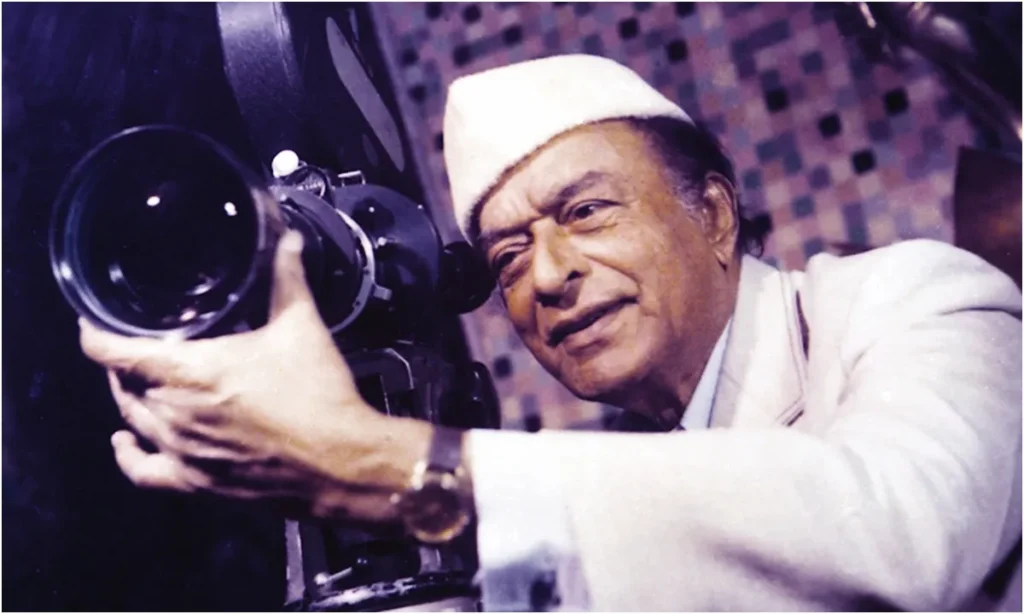
V Shantaram: If the story of Indian cinema is ever told, some names will be recorded in golden letters. The brightest name among those selected names is Venkatesh Shantaram Vanakudre, i.e. V. Shantaram. He was not just a filmmaker, but an artist who created a new language for Indian films. A person who acted, directed, gained experience in editing and became a producer and made excellent films on social issues. This was the period when cinema was just taking its first steps in the world, then a boy was born in India, who later gave a new direction to this art through his experiments and thinking. Today’s story is about the same extraordinary artist, whom people know as V. Shantaram.
Table of Content
- a stubborn dream
- the fire kept burning
- Entry into the film world
- When he became director
- A new era has begun
- golden time of cinema
- changing preferences of people
- Awards and Honors
a stubborn dream
Shantaram, born on November 18, 1901 in Kolhapur, Maharashtra, was the second among 5 brothers. Father Rajaram was a poor shopkeeper, who used to rent Petromax lanterns to drama troupes at night to meet his expenses. There was poverty in the house, but Shantaram’s childhood was spent in happiness and carefree. Shantaram was less interested in studies, but he was quite adept at imitating someone on stage. One day, this art of Shantaram brought him to the attention of the famous theater artist of that time, Govindrao Tembe. He included Shantaram in his troupe Gandharva Natak. But after reaching here, Shantaram faced his first big hurdle. Actually, he did not know how to sing. In that era, musical plays could not be successful without singing. Then it happened that Shantaram returned home disappointed only after a year. He swore that he would never return to the world of theatre.
the fire kept burning
The financial condition of V. Shantaram’s family was not good. To support the family, Shantaram started working in a railway workshop. He was a hard worker and hence he soon became trustworthy to his boss. But two fingers of his hand were crushed in an accident. Now his job and his future were also in danger. Then he remembered one thing that his maternal uncle’s son Baburao Pendharkar is a manager in Maharashtra Film Company. Anyway, a little fire for art was still alive in him, so he asked for a job from his maternal uncle’s son and from here began the real journey of one of the greatest artists of Indian cinema. After coming to Mumbai, Shantaram’s first meeting was with an extraordinary person, Baburao Painter. How special he was, you can guess from the fact that Lokmanya Tilak called him ‘Kesari of cinema’.
Entry into the film world
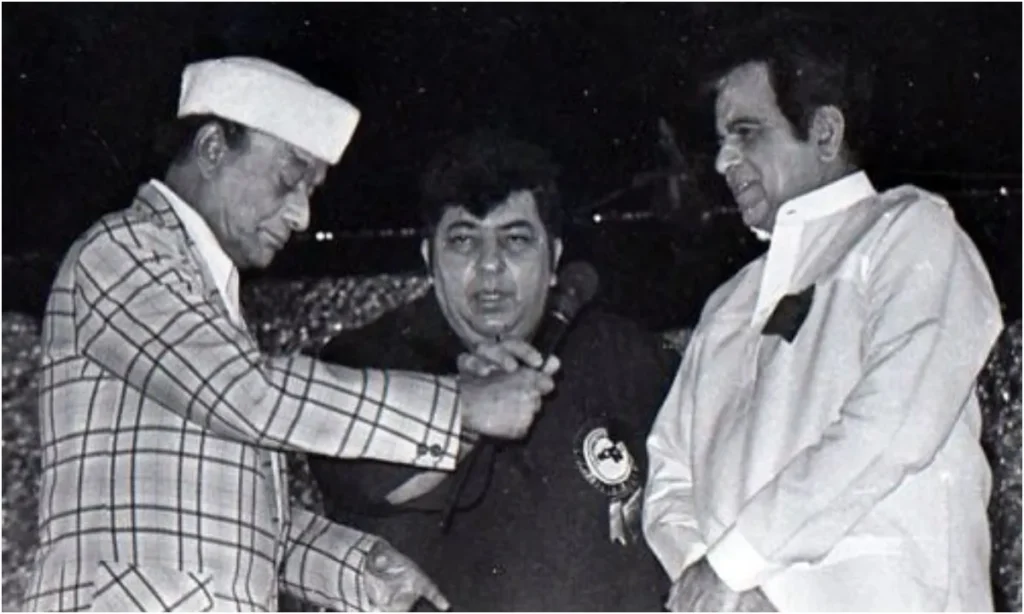
In the year 1919, Shantaram joined Maharashtra Film Company. There was a lot for him to learn here every day. At that time cinema was new in the whole world, even more so in India. How the camera operates, how editing is done, how lights are used, Shantaram would pay attention and learn all these things very minutely. Gradually three more young artists became his friends – Keshavrao Dhaibar, Vishnupant Damle and S. Fatehlal. All three had one thing in common and that was the desire to make films within each of them. Then on June 1, 1929, he along with a financier laid the foundation of Prabhat Film Company. This studio later worked to give a new direction to Indian films.
When he became director
In the year 1927, the first film made under the direction of V. Shantaram was named ‘Netaji Palkar’. Although, you will not find this film even if you search for it now, but it is mentioned in the discussions of that era. After this, he made ‘Gopalkrishna’ in the year 1929, in which the bullock cart race scene became popular at a different level in the entire country. If we look at today’s action scenes and big sets, that scene seems quite small, but it was revolutionary for that time. Then Shantaram himself played the role of Shivaji in the film ‘Udayakaal’ released in 1931. But the British Censor Board got upset after seeing this film, because it felt that it promoted the freedom movement.
A new era has begun
In the year 1931, when ‘Alam Ara’ came and the era of talkie films started in India, Prabhat Studio also made its first sound film. His name was ‘Ayodhyacha Raja’ i.e. ‘King of Ayodhya’. This was the first Indian film to be released in two languages, Marathi and Hindi. Then in the year 1933, Shantaram made India’s first color film ‘Sairandhari’. It was shot in India and processed in Germany. But its result was not special, hence the film was not released. It was not easy to stop the film after so much hard work, but for Shantaram, quality came first. After this, he made the film ‘Amrit Manthan’ inspired by German Expressionist films. Telephoto lens was used here for the first time in India. The audience of 1930 was stunned to see the close-up of the religious leader’s eyes. After this, ‘Amar Jyoti’ came in the year 1936, which was a sensitive story based on women’s freedom.
Also read: Salute to He-Man! 5 iconic films of Dharmendra which you can watch even today sitting at home
golden time of cinema
This was the time when Shantaram connected Indian cinema with social messages. He made ‘Duniya Na Mane’ in his production company. The story of this film Sala, released in 1937, was based on the marriage of an elderly man and a young girl. The next film ‘Aadmi’ was the story of a policeman and a prostitute. ‘Padosi’, released in 1941, was based on Hindu-Muslim friendship, which still feels quite fresh today. All these films of V Shantaram were made on very sensitive subjects according to that time. Then in the year 1942, he built his own studio, which he named – Rajkamal Kalamandir. He kept this name in honor of his parents Rajaram and Kamlabai.
changing preferences of people
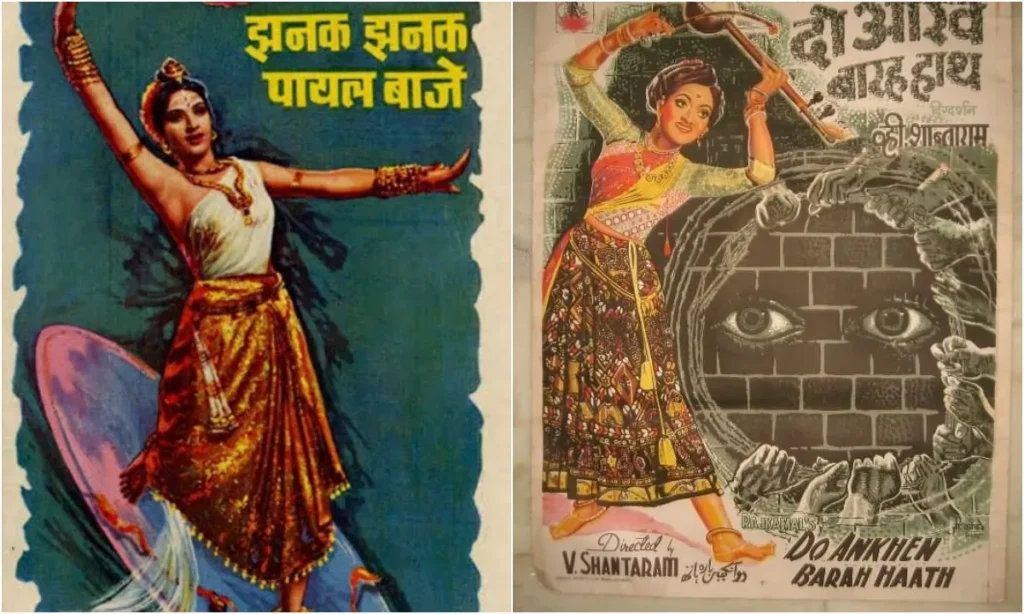
In the 1950s, the audience wanted light-hearted, colorful and entertaining films, Shantaram recognized their pulse. Then he made ‘Jhanak Jhanak Payal Baje’ in 1955. This colourful, music and dance filled film was a superhit. After this, his ‘Do Aankhen Barah Haath’ was released in the year 1957. Made in black and white, this film is still counted among the best films of Indian cinema. This film won the Silver Bear in Berlin, received the International Award from the Hollywood Press and won many titles in India. Then gradually V Shantaram started using colour, dance and music extensively in his films. His films like ‘Navrang’, ‘Stree’, ‘Sehra’, ‘Geet Gaya Patharon Ne’, ‘Boond Jo Ban Gayi Moti’ were such. Although, he never wrote the script of any film himself, but V. Shantaram’s films were full of his signature style. He gave as much importance to technique as to story. From camera to lighting and editing, V Shantaram treated every department equally. This is the reason why he became famous as the most balanced and complete filmmaker of Indian cinema.
Awards and Honors
Now talking about V Shantaram’s awards, his ‘Amar Bhupali’ received the Grand Prix at the Cannes Film Festival, ‘Do Aankhen Barah Haath’ received the Silver Bear in Berlin and the Samuel Goldwyn Award from the Hollywood Press. In the year 1986, he received the highest honor of Indian cinema, Dadasaheb Phalke Award. By the way, out of 89 years of his life, he gave 79 years to films. This is the reason why he is not called a person but an institution. He was an artist who made cinema not just entertainment but a mirror of society, a laboratory of technology and a celebration of art.
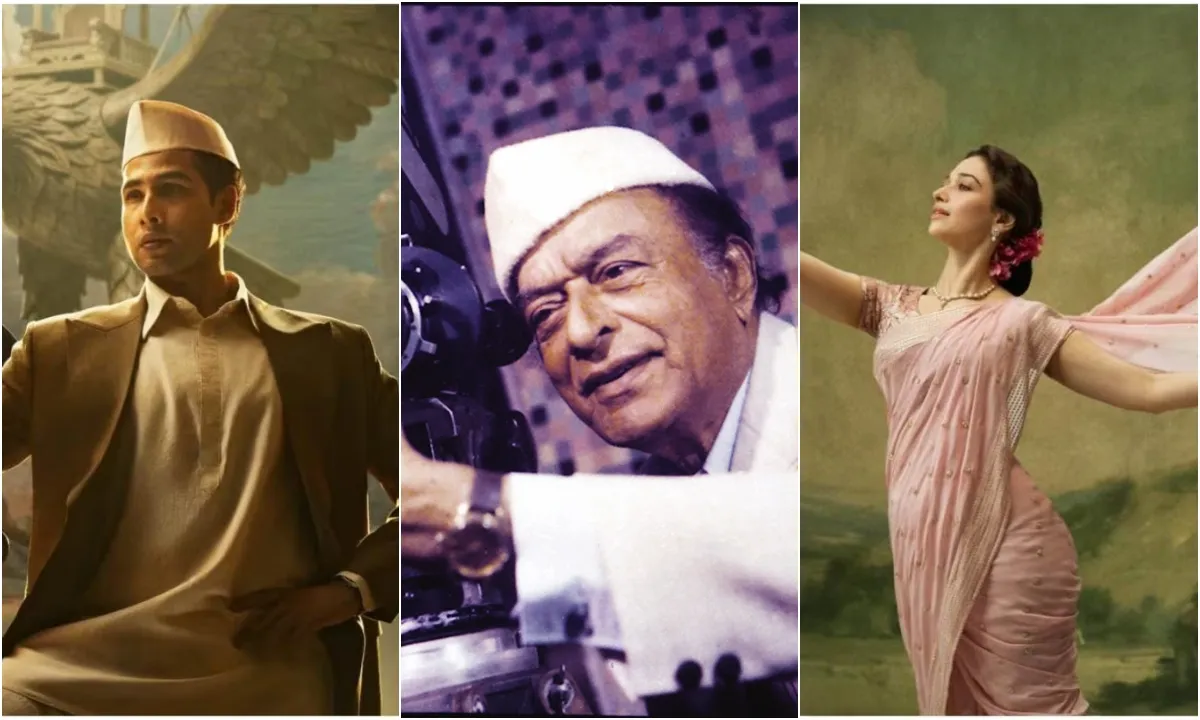
biopic
Also read: Fans go crazy over Akshaye Khanna’s entry song in Dhurandhar, Bobby’s ‘Jamal Kudu’ gets huge competition