
13
Parliament attack 2001: There are some incidents which are not only difficult but impossible to forget. The terrorist attack on Parliament in 2001 is one of them.
13 December, 2025
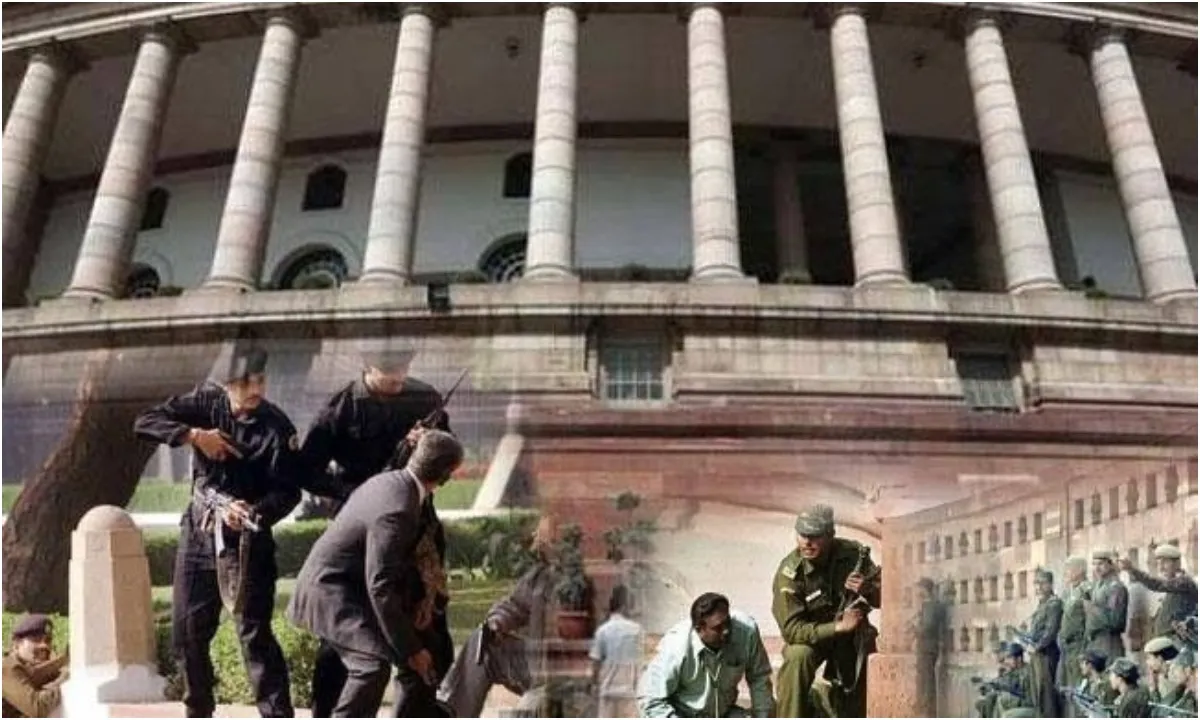
Parliament attack 2001: The day of December 13, 2001 is recorded as a dark chapter in the history of India. On the same day, a planned terrorist attack took place on the Indian Parliament, the biggest symbol of the country’s democratic system. This attack was not only a direct hit on the security system, but was also an incident that shook the entire country. This attack had an impact on India-Pakistan relations and national security policy for years. Even after so many years, the wounds of this attack on the Parliament of India feel fresh.
morning of 13th december
That morning the work in the new Parliament House was almost over. The proceedings of Lok Sabha and Rajya Sabha were adjourned about 40 minutes ago, but despite this, more than 100 people were present inside the Parliament complex. These included many MPs, senior officers and the then Home Minister Lal Krishna Advani. Meanwhile, a car with fake stickers of Home Ministry and Parliament entered the Parliament complex. The car went straight inside, dodging the security check. There were five terrorists in the car, who were said to be associated with the terrorist organization Jaish-e-Mohammed. They had AK-47 rifles, grenade launchers, pistols and hand grenades. The car collided with Vice President Krishna Kant’s car, after which the terrorists came out and started firing indiscriminately.
17 people injured
The soldiers deployed for the security of the Parliament immediately took charge. Meanwhile, CRPF constable Kamlesh Kumari first saw the terrorists and tried to raise the alarm, but she was shot and martyred on the spot. All five terrorists were killed in retaliation by security forces. 9 people lost their lives in this attack, which included 6 Delhi Police personnel, 2 Parliament Security Service personnel and 1 gardener. Apart from this, 17 people were injured. If this attack had happened some time earlier, the lives of many big leaders present in the Parliament could have been in danger.
Jaish-e-Mohammed
After investigation, Delhi Police revealed that this attack was carried out by Jaish-e-Mohammed terrorists and the Pakistani terrorist network was behind it. Indian agencies accused Lashkar-e-Taiba and Jaish-e-Mohammed. However, Lashkar denied any involvement in it. After this incident the tension between India and Pakistan reached its peak. The armies of both the countries came face to face on the border. This is called the India-Pakistan military stand-off of 2001–2002, which was the largest military buildup after the 1971 war.
hanging in tihar
Investigation started after the Parliament attack. In this case Mohammad Afzal Guru, Shaukat Hussain Guru, S.A.R. Geelani and Navjot Sandhu alias Afsan Guru were made accused. After a long legal process, Afzal Guru was sentenced to death. His execution was postponed for many years. However, he was hanged in Tihar Jail, Delhi on February 9, 2013. But this case also sparked a long debate on issues like justice system, policy to deal with terrorism and human rights. Some accused were later acquitted, which raised many questions. Not only this, this attack was strongly condemned at the international level also. Leaders of many countries supported India. The Indian government demanded from Pakistan that it should take strict action against the terrorist organizations operating there.
glimpse seen in films
The footage of Sansad Hamke and the operations related to it have been shown in many films and web series. Recently released Ranwari Singh’s film Dhurandhar also starts with the Parliament attack. Well, the Parliament attack of December 13, 2001 still reminds the country how important it is to protect democracy. This was not just a terrorist attack, but a challenge to India’s sovereignty and self-respect, to which the country responded unitedly.
Also read: Russian Oil: India becomes the second largest buyer of Russian oil, China remains at the first position.