
29
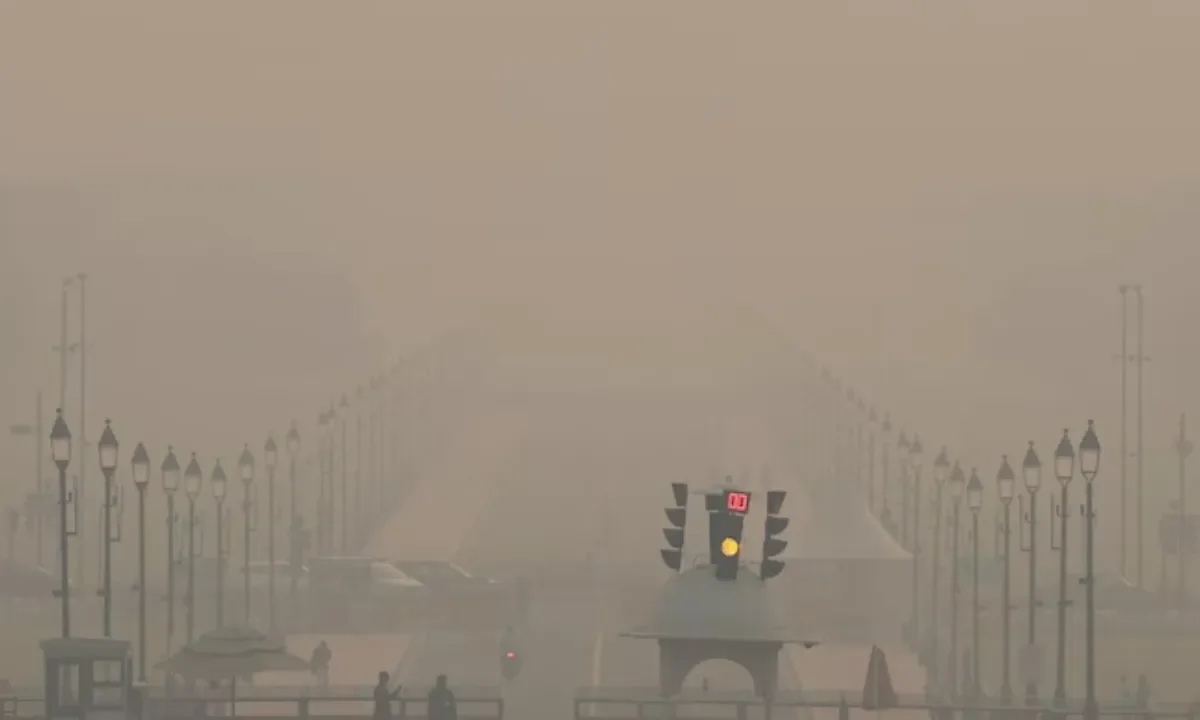
Air pollution in Delhi: Air pollution in Delhi remains a serious threat to health. Analysis has shown that about 15% of deaths in Delhi in 2023 are due to air pollution.
Air pollution in Delhi: Air pollution remains a serious threat to health in Delhi. Analysis of Global Burden of Disease (GBD) 2023 data revealed that about 15% of deaths in Delhi in 2023 were due to air pollution. According to the Institute for Health Metrics and Evaluation (IHME), exposure to ambient particle pollution caused an estimated 17,188 deaths in the city. This means that one out of every seven deaths in Delhi was linked to polluted air. However, the central government has said that there is no conclusive data available to establish a direct link between air pollution and death. This situation remains a matter of debate, while statistics point towards the harmful effects of pollution. The GBD study is one of the most comprehensive research projects in the world, assessing how people die and what makes them sick, across all countries, age groups and causes.
Death due to high BP after air pollution
The other major factors contributing to deaths in Delhi in 2023 after air pollution were high systolic blood pressure (14,874 deaths or 12.5 percent), high fasting plasma glucose or diabetes (10,653 deaths or 9 percent), high cholesterol (7,267 deaths or 6 percent), and high body-mass index (6,698 deaths or 5.6 percent). Researchers from the Center for Research on Energy and Clean Air (CREA) analyzed the latest GBD data. Despite year-to-year fluctuations, deaths caused by air pollution remain consistently high, often exceeding deaths associated with hypertension or diabetes, the researchers said. CREA analyst Manoj Kumar said air pollution is not just an environmental issue, it is a public health crisis that requires science-based interventions in polluting areas to achieve real and measurable pollution reduction.
Risk of heart disease due to pollution
He said unless Delhi’s air quality improves substantially, pollution-related diseases, especially respiratory diseases, heart disease, stroke and lung cancer, will continue to increase. The data shows that deaths related to air pollution are expected to increase from 15,786 in 2018 to 17,188 in 2023. Over the same period, deaths from high blood pressure increased from 13,604 to 14,874, while deaths from high fasting plasma glucose increased from 8,938 to 10,653. CREA said Delhi’s data serves as a reminder that effective air pollution control is one of the most powerful public health interventions, capable of reducing disease burden, improving quality of life and increasing life expectancy for millions of residents.
Minister expressed concern over air pollution
Responding to a question, Union Minister of State for Environment Kirti Vardhan Singh told the Rajya Sabha on July 24 this year that air pollution can affect respiratory diseases and related diseases. He said health is determined by many factors, including eating habits, occupational exposure, socio-economic conditions, medical history, immunity, heredity and environmental factors. The minister said that air pollution is definitely a matter of concern, but considering it as the sole cause of mortality is not scientifically accurate.