
17
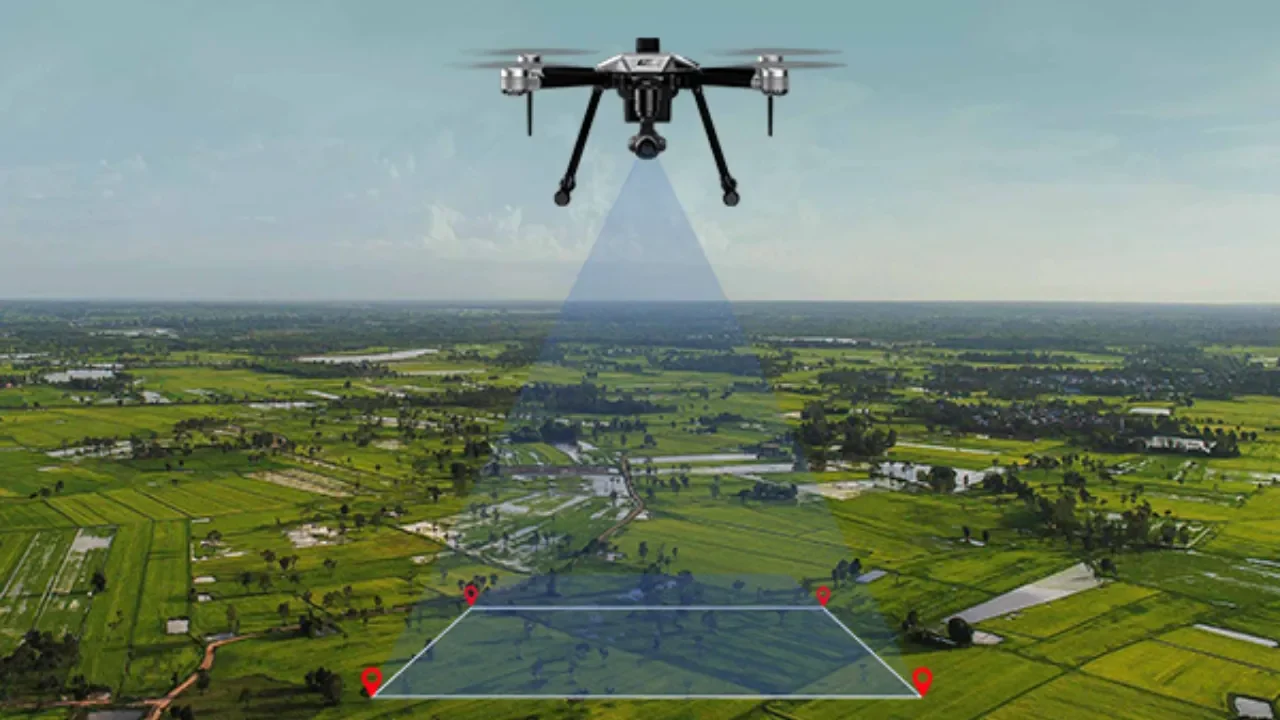
BHU-MANACHITRA: Researchers at the National Institute of Technology (NIT) Rourkela have obtained the patent for a land mapping drone system named BHU-MANACHITRA.
BHU-MANACHITRA: Researchers at National Institute of Technology (NIT) Rourkela have obtained the patent for a land mapping drone system named BHU-MANACHITRA. This advanced system uses Artificial Intelligence (AI) and Unmanned Aerial Vehicle (UAV) technology to automatically generate land maps without internet connectivity, external computers or manual intervention. Researchers said that this technology can reduce the time and cost of traditional land mapping to a great extent. Currently, land mapping in India depends on manual surveys, which take weeks to months to complete and the maps are not always accurate. The new system can identify fields, forests, vegetation and urban areas, which is extremely important for natural resources and the environment.
Automapping will be done without internet
This innovation will give more accuracy to the land survey technology in the country. Sambit Bakshi, Associate Professor, Department of Computer Science and Engineering, said that deep learning models are being developed all over the world for land mapping. They are often unable to correctly identify roads, buildings and vegetation due to crowding. These models also often depict inaccurate maps. Said that to overcome these problems, we have developed a model which helps drones in mapping the land. Apart from this, the system can also help in the Digital India Land Records Modernization Program (DILRMP) launched by the Government of India in 2016, which aims to digitize maps to create a modern and integrated land records system.
Useful for floods, landslides and earthquakes
Researchers said the system can provide instant terrain information during natural disasters such as floods, landslides and earthquakes, helping officials make quicker and more effective plans. Environment and forest departments can use it to monitor deforestation, encroachment and changes in biodiversity. Bakshi said that a lightweight AI model with 2.48 million parameters used in BHU-MANACHITRA makes it suitable for on-board processing.
Also read: IIT Delhi becomes India’s best institute, Lund University achieves first position in the world for the first time