
5
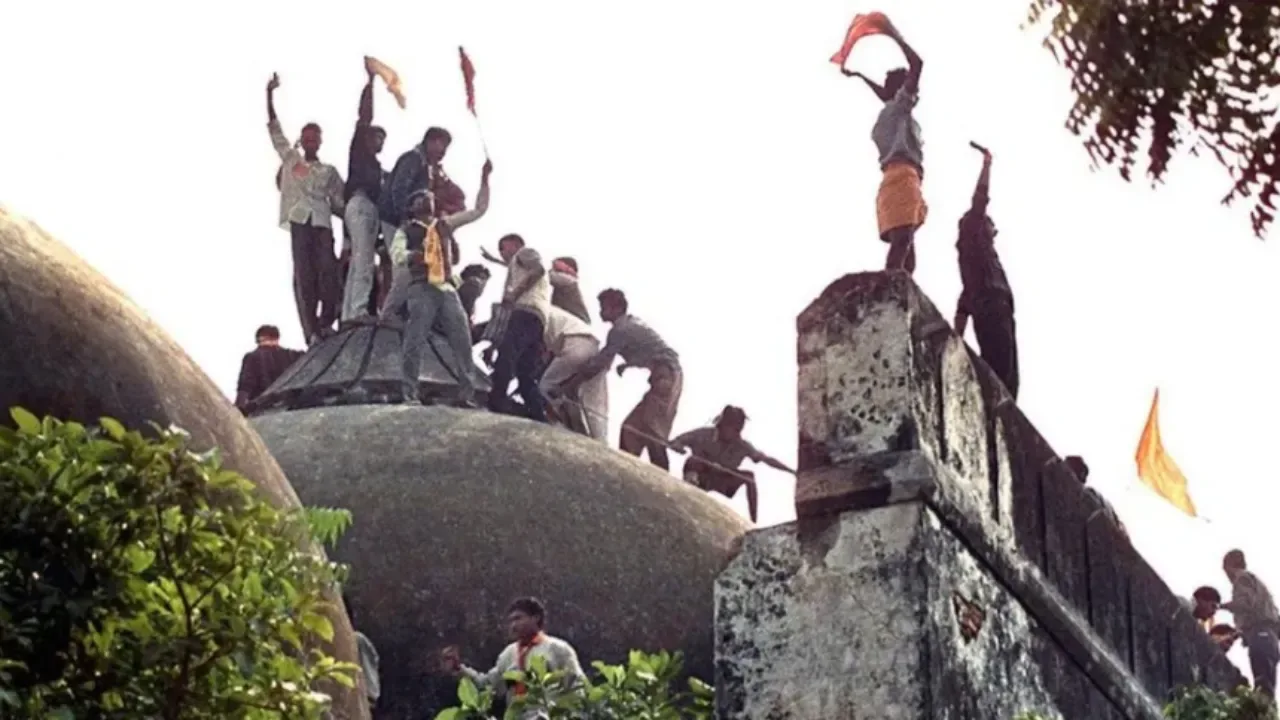
babaree masjid vidhvans: 6 December 1992 was recorded in the pages of history as a day which shook the whole of India. Even the Faizabad district administration had no idea that the spark emanating from here would engulf the entire country.
babaree masjid vidhvans: 6 December 1992 was recorded in the pages of history as a day which shook the whole of India. Even the Faizabad district administration had no idea that the spark emanating from here would engulf the entire country. On 6 December 1992, a mob of Hindus demolished the 16th century Babri Masjid in Ramnagari Ayodhya. About 1,500 people were killed in the riots that followed. On the call of Vishwa Hindu Parishad and Bajrang Dal, thousands of people from every corner of the country reached Ayodhya. By the evening of 4 December 1992, thousands of RSS workers had already gathered in Ayodhya. Hindus had planned to start construction of a temple at the site of the Babri Masjid, which they considered to be the birthplace of Lord Ram. The then international president of Vishwa Hindu Parishad, Ashok Singhal, had also reached Ayodhya by 5 December.
VHP intensified campaign for the temple in the 1980s
There was a football field at some distance from the mosque. Where thousands of workers were gathered wearing saffron bands and scarves on their heads. In the 1980s, the Vishwa Hindu Parishad (VHP), with the Bharatiya Janata Party (BJP) as its political voice, started a campaign for the construction of a Ram temple at the site. Several rallies and marches were organized as a part of this movement, including the Ram Rath Yatra led by Lal Krishna Advani. On 6 December 1992, Vishwa Hindu Parishad and BJP organized a rally of 1,50,000 people at that site. The rally turned violent and the mob attacked the security forces and demolished the mosque. The subsequent investigation into the incident found 68 people guilty, including several leaders of BJP and Vishwa Hindu Parishad. The demolition resulted in several months of rioting between India’s Hindu and Muslim communities, leaving at least 1,500 people dead. Retaliatory violence against Hindus also took place in Pakistan and Bangladesh.
Advani was arrested in Bihar on 23 October 1990.
Following the Mughal conquest of the region in 1528, the Mughal commander Mir Baqi built a mosque at the site, and named it ‘Babri Masjid’ after the Mughal emperor Babur. It was first claimed in 1822 by an official of the Faizabad court that the mosque stood on the site of a temple. Ram Rath Yatra led by Lal Krishna Advani started on 25 September 1990 from Somnath in Gujarat. The yatra was stopped on 23 October 1990 in Samastipur, Bihar by the then Chief Minister Lalu Yadav and Advani was arrested. The purpose of this yatra was to garner support for the proposed temple and to consolidate Hindu votes by stoking anti-Muslim sentiments. Even before Advani reached Ayodhya, Lalu government of Bihar had arrested him. Despite this, a large group of Sangh Parivar supporters reached Ayodhya. BJP withdrew its support from the VP Singh government, leading to fresh elections. The BJP significantly increased its number of seats in the Union Parliament, and also won a majority in the Uttar Pradesh Assembly.
CBI frames charges against many leaders including Advani
On 16 December 1992, the Union Home Ministry constituted the Liberhan Commission under the chairmanship of retired High Court judge MS Liberhan to investigate the demolition of the mosque. After 399 meetings over 16 years, the commission submitted its 1,029-page report to Prime Minister Manmohan Singh on 30 June 2009. The report said that the events of 6 December 1992 in Ayodhya were neither spontaneous nor unplanned. In April 2017, a special CBI court framed criminal conspiracy charges against Advani, Murli Manohar Joshi, Uma Bharti, Vinay Katiyar and several others. On September 30, 2020, the court acquitted all 32 accused in the case, including LK Advani, Murli Manohar Joshi, Uma Bharti, Vinay Katiyar and many others, on the basis of evidence. When Babri Masjid was demolished, there was a Congress government at the center and PV Narasimha Rao was the Prime Minister. Whereas in Uttar Pradesh there was a BJP government under the leadership of Kalyan Singh.